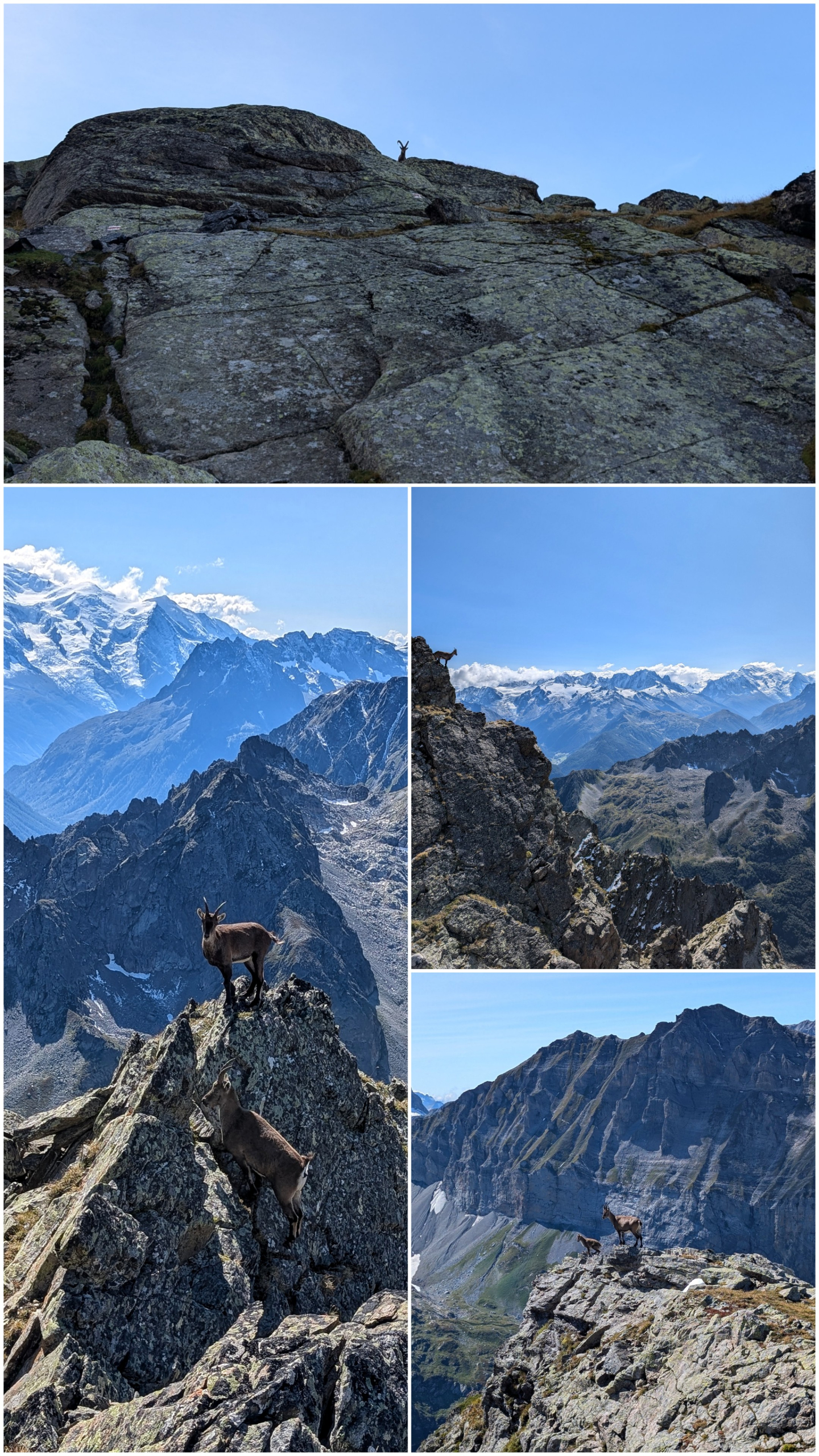
2.10.2025 – From Champéry to the Haute Cime – My Journey into the seven Dents du Midi

I set out from Champéry early in the morning, the village still quiet, the peaks of the Dents du Midi glowing in the first light. The trail rose quickly through forest and pasture, pulling me higher into the mountains.

By the time I reached the Cabane de Susanfe, I felt the closeness of the mountains all around. I continued for the Haute Cime, the highest of the seven Dents. The climb was steep and rocky, every turn testing my breath and my legs, but also filling me with anticipation. When I finally stood at 3,257 meters, the panorama stopped me in my tracks: an endless sweep of peaks, clouds drifting below, silence broken only by the wind or birds.

On the long way back, tired but content, I carried with me more than just the view. The Haute Cime gave me that rare gift mountains sometimes offer: the reminder of how small we are, and at the same time how limitless we can feel.

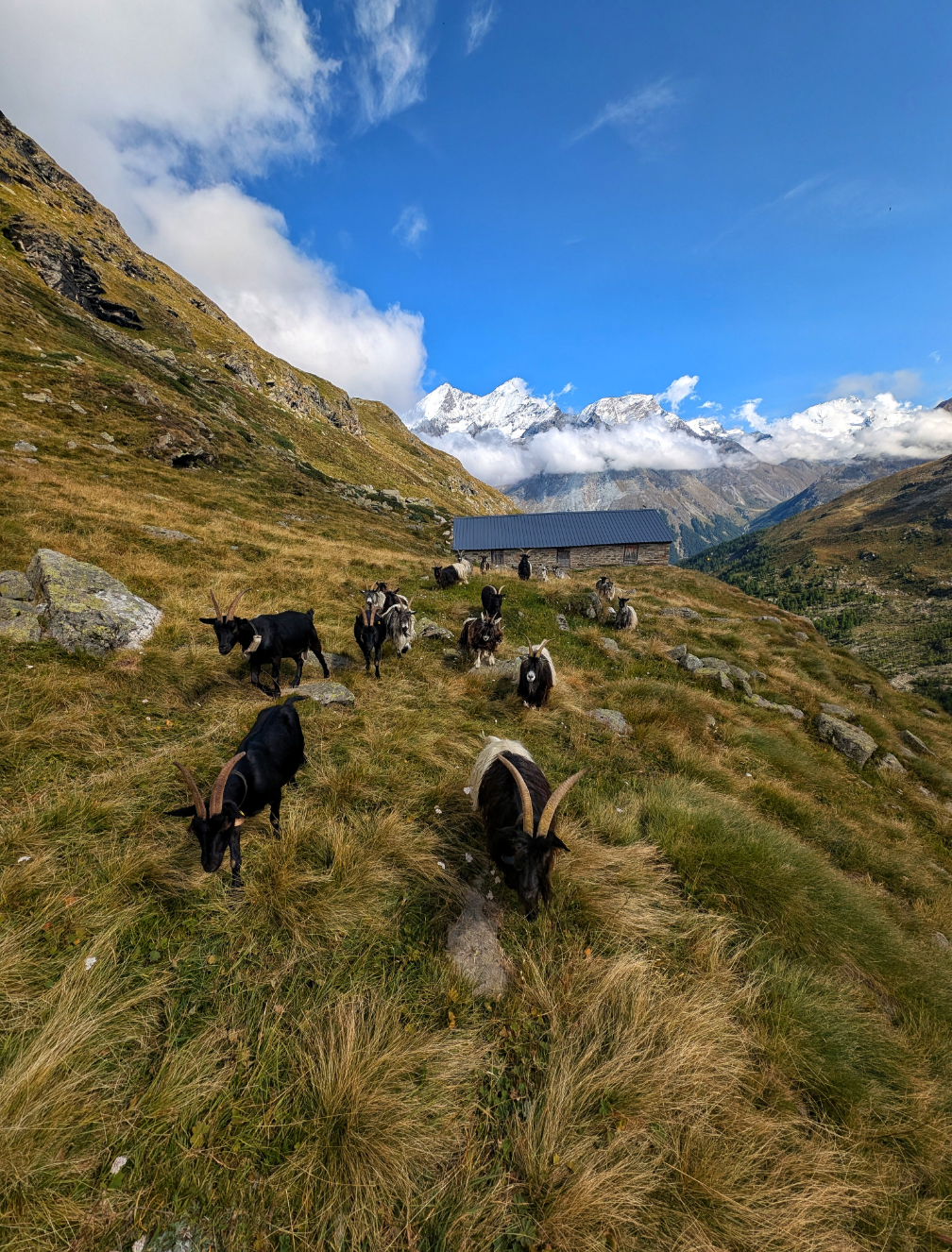
This summer, I continued to trail several high Swiss mountains, especially three-thousanders. Each one left its own mark on and for me.
The Punta Terra Rossa/Wasenhorn (3’246m) greeted me with its warm, red stone and the feeling of stepping into another world. The view of Monte Leone and the other three and four-thousanders was breathtaking.
On the Sparrhorn (3’020m), the view over the Aletsch Glacier was fantastic.
The Mattwaldhorn (3’246m) & Simelihorn (3’124m) offered me solitude, a peak where silence stretched further than the horizon.
The Almagellerhorn (3’327 m), standing proudly above the Saas Valley, gave me an incredible feeling, especially during the uphill climb.
The Wildstrubel (3’244m) hike was a chapter of its own. Long and steady, it led me through vast alpine landscapes. It wasn’t just about reaching a peak—it was about moving through a world of glaciers, high plateaus, and silence, a reminder that sometimes the journey itself holds the greatest reward.

Each summit carried its own challenge, but also its own gift. With every climb, I felt myself becoming lighter, freer, and more connected to the mountains. By the end of summer, I realized I wasn’t just collecting peaks—I was collecting moments of clarity, pieces of myself that only the high places could return to me.

Autumn has already arrived, the light softer, the air sharper. The mountains call me still, and I know the season of discovery continues—just in a different color, a different rhythm, but with the same heartbeat.

Wildstrubel

The tour starts at the Simmenfälle (1,100 m) above Lenk, where the Simme river cascades down in multiple steps. From here, the trail climbs steadily through forest and alpine pastures to the Flueseeli and on toward the Flueseeli plateau (~2,000 m). The landscape quickly changes from green meadows into rock and scree.

Above ~2,500 m, the route crosses more barren alpine terrain before reaching the final push to the Wildstrubel summit plateau (3,243 m), where you are rewarded with sweeping views across the Bernese Alps, Wallis/Valais 4000ers, and down into the Rhône Valley.

The descent follows the same way back down to the Simmenfälle.


Key Facts

Highlights: Simmenfälle waterfalls, Flueseeli, remote high alpine landscapes, panoramic summit

Start/Finish: Lenk, Simmenfälle (1,100 m)

Summit: Wildstrubel (3,243 m)

Elevation gain: ~2,100 m

The second part of the Södra Kungsleden, running from Sälen to Flötningen, covers roughly 145 kilometers and took us seven days to complete, including some detours. Compared to the Storlien–Grövelsjön stretch, this section is wilder, more solitary, and less frequented, which gives it a distinctly remote character. The trail follows the Scandinavian mountain range northwards along the Norwegian border and leads through a varied landscape of open mountain plateaus, birch forests, deep spruce valleys, and countless lakes.

Starting in Sälen, the trail first passes through forest and lake country before reaching Fulufjället National Park, home to Sweden’s highest waterfall, Njupeskär, which plunges 93 meters. On the plateau above, hikers walk across vast, windswept terrain and may visit Old Tjikko, a 9,500-year-old spruce often described as the world’s oldest living tree. From there, the path continues through sparsely populated wilderness, where encounters with moose and rich birdlife are common.

Infrastructure is more limited here than in the northern Kungsleden sections. There are very well-maintained STF huts and basic cabins. Resupply opportunities are rare. Toward Flötningen, the trail gradually descends into dense forests and secluded valleys, eventually reaching the small settlement at the border, which also serves as a gateway toward Grövelsjön, Femundsmarka National Park in Norway.

In essence, the Sälen–Flötningen stretch of the Södra Kungsleden offers a quieter and more rugged experience, rewarding hikers with striking natural contrasts, from the thunder of Njupeskär waterfall to the silence of remote forest wilderness.

Södra Kungsleden

Over the last eight days, I have hiked approximately 225 kilometres through the last remaining wilderness in Europe, encompassing and traversing Sarek National Park. As always, it was very impressive and full of experiences. There are places and moments in life for which there are no words. Being in harmony with nature is a profoundly enriching and satisfying experience.

Thank you Lapland!

We spent an inspiring time in beautiful South Tyrol, surrounded by high snow-covered mountains and lots of love. At an altitude of about 1730 meters, we embraced the joy of winter activities. The breathtaking views captured our hearts. I went cross-country skiing for the first time in five new spots, including Val Müstair and Unterengadin (between Scuol and La Martina). The magnificent trails invited us to explore, while Val Venosta became a place to linger and dream.

January 2025 – After the polar night in December, when no sun-ray touches your skin, the days slowly start getting longer, and the increasing amount of light inspires you to hit the slopes. This region is energizing for one who loves cross-country skiing. I was embedded in love. Awe and wonder were my constant companions in all my activities and even caught me in my dreams. Aurora, the northern lights, were dancing and shining. They directly spoke to my heart.

Finnish Lapland

There are eight seasons in Lapland. Each has its own specialty. This was my third time in Finnish Lapland; it feels like home every time. You not only feel nature, but you are entirely immersed in it, woven in it, part of it; you are one; you are nature!

I have covered practically the entire cross-country ski trail network in Switzerland, thousands of kilometers, and for me, there is one region that stands out in particular – the Jura. The last wilderness for cross-country skiers in Switzerland. Beautifully nestled between Switzerland and France, this part is what cross-country skiing is all about for me. Magical and emotional plains with forests that touch the heart.

Jura – Prés-d’Orvin

Jura – L’Auberson

You have to immerse yourself and be inspired by this nature. If anyone needs tips, please ask. Bonne chance!

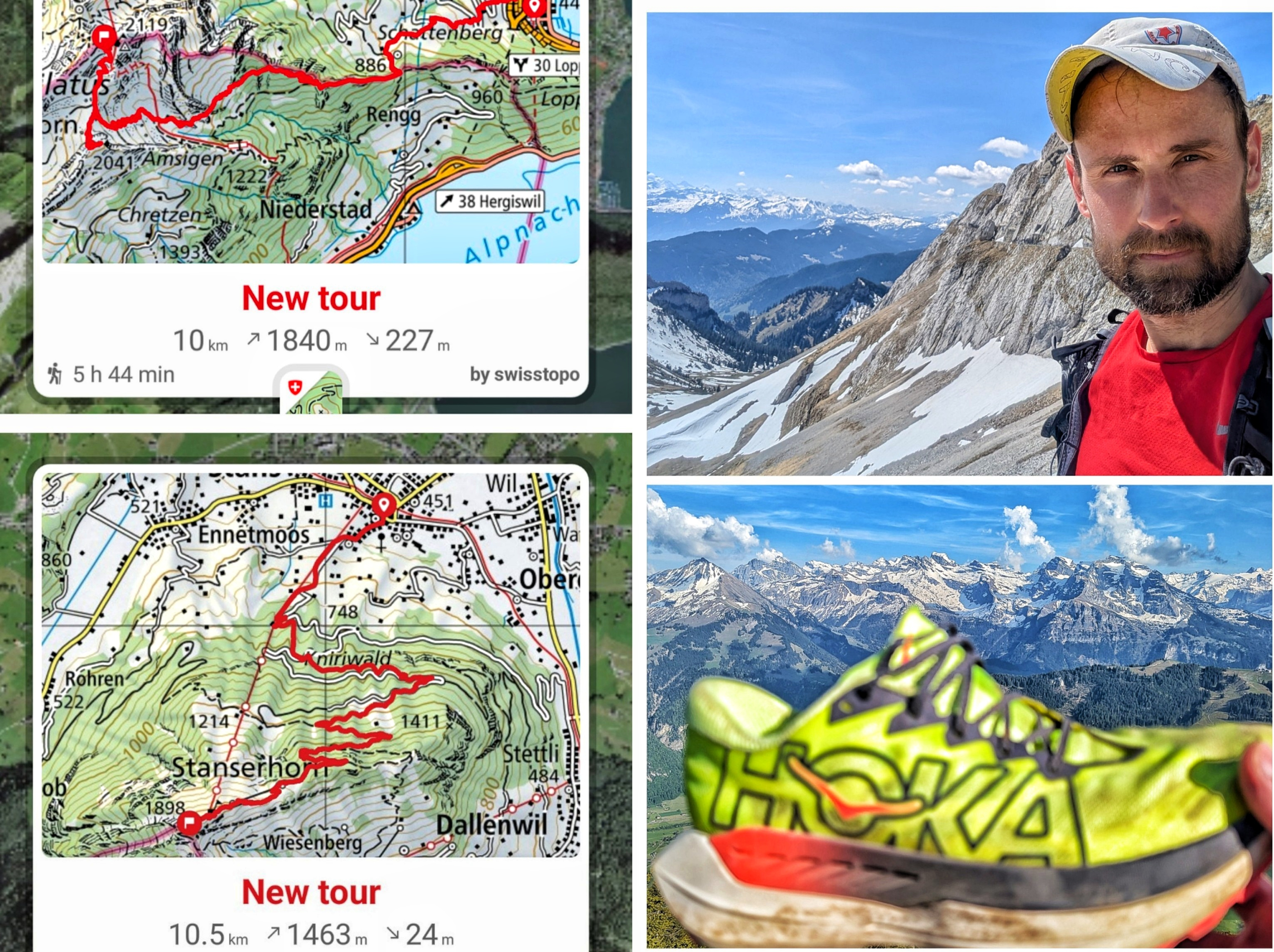
I did 29 mountain runs and hikes in the Swiss Alps this summer and autumn, 12 times over 3000m asl. It’s such an incredible scenery; your Heart and Soul always feel better and get more clarity during and after the trail. After over 600 trail runs, I still have not seen every corner of Switzerland, and I’m very thankful to live here in this great country with beautiful mountains and lakes. The fall season is often my favorite time for trail runs, especially when the leaves of the larches and other deciduous trees show their most colorful side. I look forward to lingering and dreaming in the golden hours in the following weeks of late fall.

I did the following four runs/hikes in Graubünden:

  • Piz Julier [3380m asl]
  • Piz Ot [3246m asl]
  • Alp Flix
  • Corn da Tinizong

Eleven in Wallis/Valais:

  • Platthorn [3345m asl]
  • Weisshornhütte and Wisse Schijen [~ 3265m asl]
  • Oberrothorn and Hohtälli [3414m asl]
  • Kleines und Grosses Bigerhorn [3626m asl]
  • Hörnlihütte [3262m asl] and Trockener Steg
  • Jegihorn [3207m asl] and Hohsaas [~ 3137m asl]
  • Le Luisin and Col de Barberine
  • Sasseneire (Col de Torrent) [3254m asl]
  • Cabane de Tracuit [3259m asl]
  • Dom Hut (200m above) [~ 3140m asl]
  • Baltschiedertal Suonen hike

Five in Uri:

  • Erstfeldertal with Älplilücke and Guggital
  • Göscheneralp with Chelenalphütte
  • Göscheneralp with Bergseeschijen, Voalphütte and Salbithütte
  • Bälmeten, Hoch Fulen and Gross Spitzen
  • Nätschen, Schneehüenderstrock, Pazolastock and Tomasee (Graubünden)

And nine in the canton of Bern:

  • First (Kandersteg)
  • Blüemlisalphütte (under Wildi Frau) [~ 3100m asl]
  • Schwalmere with Lobhörner
  • Niesen
  • Chrinnenhorn with Glecksteinhütte
  • Schreckhornhütte
  • Gantrisch Trail (Swiss Championship)
  • Blausee & Oeschinensee
  • Harder Kulm or Top of Interlaken

Most of them between 2500m and 3500m asl.

Here you can find some impressions.

My favourite hiking canton(s) in Switzerland? Ufff, that’s tough, but I would go for Uri, Ticino and Grisons. If I had to choose one, it would be Uri. Such a diversity in a region with an area of 1,077km2. It is the centrepiece of Switzerland, especially geographically. Uri is one of the founding cantons, the “original” canton par excellence. From myths and legends to heroic epics. It’s full of exciting stories! I love the landscape, that is engraved in my heart. It is the glue that holds the Swiss regions together and connects them – South and North, East and West. Both a water castle and a mountain colossus, Uri is a natural paradise! Watch out – the morning and evening hours over Uri are unmistakable, unforgettable!…